
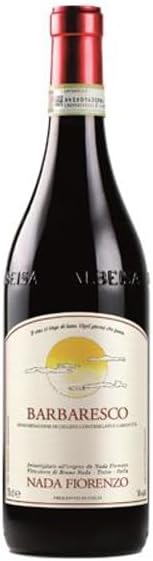
NADA FIORENZO Barbaresco 2021 Four Generations of Winemakers Carlo, the Settlement and Production of Bulk Wine An enterprising farmer from the Langhe, coming from a poor family who worked the land as sharecroppers, purchased the Rombone farmhouse in Treiso in 1921, then a hamlet of Barbaresco and now an independent municipality. He immediately began producing wine, which he sold in bulk to several local restaurateurs. Fiorenzo, Selling Grapes The penultimate of Carlo's seven children, he inherited a small plot of land from his father in the early 1960s, when the property was divided among his four sons. However, resources had become limited, so Fiorenzo decided not to continue his father's winery and instead sold his grapes, which were in high demand at the time from local merchants. Bruno, abandonment, return to the vineyard, and the first bottling During the economic boom, like almost all local young people, lured by the promise of a less miserable life, he left Treiso and moved to the city in the mid-1960s. After his studies, he began teaching at a school in Alba and later at the Barolo Hotel Institute, where he introduced food and wine as a subject for future restaurant workers. His bond with Treiso and his land, however, did not break; meanwhile, the older generation of farmers, who had shaped these hills, continued to decline. Slowly began to decline, with no one able to take up their legacy. The turning point came when Bruno proposed to his family that they no longer sell the grapes, which were always poorly paid, but instead set up a cellar to vinify and bottle the wine, produced with fewer bunches per vine to promote maturation. A simple idea, which may seem banal today, but was revolutionary in these parts at the time. Pruvuma (let's try) was the only word uttered by father Fiorenzo. It was 1982, and thus the first bottle produced by the Nada Fiorenzo winery was born. Danilo, the fourth generation; winemakers are born and remain so The beginning of the new millennium was the time of a complete rediscovery of agricultural work by young people. A new generation arrived in the vineyard: motivated, "English-speaking," respectful of traditions, and sensitive to environmental issues. So did Danilo, Bruno's son, who chose the vineyards after university. And here is the turning point in this story that, having begun almost a century ago, is projected into the future. The tomorrow, which Danilo began to write today; treasuring the wealth of knowledge that "his fathers" passed down to him, and supported by the generosity of this million-year-old soil called Terra di Langa. The Winery The winery is located in Rombone; here, the grapes, exclusively from the estate and the fruit of many months of care in the vineyard, arrive after being hand-picked into crates and begin a long journey. After gentle pressing, maceration and primary fermentation with the skins and seeds are followed; this is the transformation of sugars into alcohol, which takes place in temperature-controlled vats using traditional methods of pumping over and punching down. Fermentation Then comes the secondary fermentation, which transforms the harsh malic acid into the softer lactic acid, again taking place in the vats. This is followed by aging in barrels, where the new wine will soften its harshness. This period is short for the fresher wines; or very long, up to two years, for the Barbarescos. Finally, bottling follows, followed by a further several months in the cellar's basement, where the wine will seek its harmony. And so it's time to present the new vintages, and the bottles, after labeling, are added to local wine lists or set off for distant shores. Barbaresco Fiorenzo Nada's Barbaresco is produced in the Rombone and Manzola crus in the municipality of Treiso, in the heart of the Piedmontese Langa region on sunny slopes at 230-260 meters above sea level. Long aging in oak barrels accentuates its elegance and pleasantness, giving it a captivating drinkability. Elegant and with a beautiful, bright garnet red color, it has intense and fragrant floral aromas. It's pleasant on the palate, satisfying, and versatile in pairing. Ideal with timbales, pasta with meat sauces, stews, delicate roasts, and hard cheeses.
- NADA FIORENZO Barbaresco 2021
- 0.75 L Bottle
Schreibe die erste Rezension für „NADA FIORENZO Barbaresco 2021“
Ähnliche Produkte
Unkategorisiert
Unkategorisiert

Unkategorisiert
Unkategorisiert
Unkategorisiert
Unkategorisiert
Unkategorisiert
Rezensionen
Es gibt noch keine Rezensionen.